lundi 25 mai 2009

Initial assessment of floating balances


Floating balances (traders the opportunity to choose two weeks of sales per year) was one of the measures implemented to boost competitiveness and attendance centers. Overall, the results are very mixed. The National Center malls (CNCC) found that attendance in supermarkets fell 4.7% in April 2009 compared with same month in 2008.

In fact, it appears that the device floating balances would be more effective if the distributors agreed to consult and establish a common catalog.

mardi 19 mai 2009

Cheap iphone? soon ...


Apple Iphone could launch a cheap, it could launch cheaper versions of the iPhone without having to subscribe to the monthly data transfer, in order to boost sales of its handset.

The next year or in two years, iPhone models do not require a monthly subscription service for data transfer representing a minimum surcharge of 30 dollars (22 euros) in the United States, will be offered to their customers . A cheap model would also help Apple reach an agreement with the telecom operators in China to enter the largest market in the world.

The decline in the price of the Iphone is logical for me, since technological change push phone models to be less and less. Finally, it is not surprising to Iphone enters China market since it is the end of the cycle of innovation for the European telephone companies.

lundi 18 mai 2009

The agency FITCH, pessimistic for large retailers in 2009


Find below a dispatch from Reuters of 14 May that I have voluntarily decided to publish because it is self-explanatory and does not deserve additional comments:

For large retailers, 2009 is a lost year "(Fitch)

"The effects of changes, slower inflation and lower sales volumes should greatly affect the European brands of large retailers, most of which will stop their policy of expansion, said the rating agency Fitch on Thursday. "2009 is a lost year in terms of growth for all brands of distribution, which will focus on their core market and core business," said at a press conference Johnny Da Silva, Research Director at Fitch.

Last year, distribution was resisted by increasing food prices, which had helped offset declines in volumes. But in 2009, the drop in consumption linked to the crisis continued, but inflation also slowing.
As a result, overall growth in sales the first six food groups in Europe (Carrefour, Tesco, Casino, Sainsbury, Metro and Ahold) is expected to melt at 4% this year against 8% in 2008, according to Fitch. The non-food brands should continue to suffer this year after suffering adverse trade-offs of consumers in 2008.

The turnover of these brands (Kingfisher, Marks and Spencer, Next, DSG) is expected to grow by less than 1% in 2009 against 1.5% in 2008.
The impact of foreign exchange is also very important (down to the pound sterling for UK retailers, strong euro for distributors french or German). The effects of changes expected to cost between 1% and 3% of sales of European brands, predicted Mr. Da Silva. In response to these problems, food retailers and food should not reduce their investment of -15% and -45%, in particular investment for expansion. Carrefour has already announced earlier this year to focus on France, its traditional market, while the British put Tesco on Great Britain and Metro in Germany.

Among the ten brands in this study, Fitch indicated that only the Dutch Ahold and Sainsbury British have a margin of maneuver for a policy of expansion. The first because it has already restructured in the early 2000s and the second because he conducts a prudent financial policy, "said da Silva.

The decline in consumption also affects the full brunt of the food and spirits.
Food companies Nestle, Unilever, Danone and Cadbury and should record increases in turnover of up to 2%, far from the goals of 5% to 9% set by these companies, said Fitch. The turnover of the companies in wines and spirits (Diageo, SAB Miller, Carlsberg, Pernod Ricard) should be between -2% and 2%, after growth in a range from 5% to 7% last year. The benefits should be either stable or decreased after an increase between 5% and 9% in 2008 and up 27% in 2007. People not only consume less than spirits, but they refer to the cheaper brands, noted Fitch. "

mercredi 13 mai 2009

Française des Jeux and Retailers


La Française des Jeux (FDJ) has confirmed the closure of its outlets in supermarkets whose opening had attracted the wrath of tobacconists. The withdrawal can be explained by "the changing economic environment."

It seems rather than lobbying tobacconists is more convincing than that of supermarkets. It is true that the tobacconists are already in trouble with the restrictions on tobacco. Rest now know where the interests of consumers?

lundi 11 mai 2009

Fair Trade face to the crisis


Here is clearly another victim of the financial crisis.

Introduced in France in 1950 by Abbé Pierre, fair trade has made a tentative entry into our country. 9 years ago, only 15% of consumers were aware of fair trade.
The 2000s are a good omen for this type of trade because it falls within the mores of consumers.
In 2008, while 80% of consumers have already bought products from this type of trade, fair trade grew by 22% and represents an annual turnover of around 260 million euros.

This year, the price of fair trade products that are labeled in the stores are 22% more expensive than a conventional product. With the crisis, families are much more attention to their budget and solidarity is no longer part of their priorities.

I find that it is precisely at this moment that the symbolic gesture of solidarity is strongest.

"The rich can not change the lives of the poor, but when it becomes a poor turn, it can however understand all the poor."

yes I know the deep Bisounours, so what? it feels good sometimes not:)

jeudi 7 mai 2009

Carrefour : Wants to play Tzar


Carrefour already operates in China, turns his head towards the "Rodina" (Motherland, Russia). Indeed, the french group of large retailers want to buy the Russian Sedmoï Kontinient for 1.24 billion dollars.

In fact, by the particular group of countries to adapt culturally, where it expands, which Russia sees good eye redemption. Carrefour is already prepared to adapt these products and messages to a Russian customer.

While Carrefour appeared to have been weakened by various problems (see our post on Carrefour) it is the opposite of a surprise expensionisme.

The crisis does not seem to have weakened all the major brands .....

mardi 5 mai 2009

Carrefour wants to penetrate the BRIC market


After China and unable to settle in India where the group met with many difficulties, it seems that Russia offers more facilities. Indeed, Carrefour is reportedly negotiating the purchase of the supermarket chain Sedmoï Kontinient. The amount of the transaction involved a total of approximately 940 million euros. Russian distributor currently has 140 outlets in Russia.

It would therefore appear that the establishment of Carrefour in emerging markets with high potential remains a priority of his strategy.

dimanche 26 avril 2009

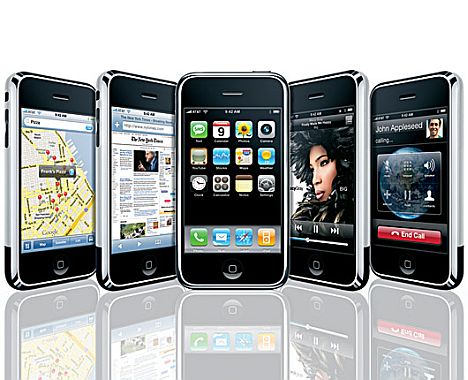
iPhone, the key to its success: The innovation


The Iphone is not only became the flagship product of Apple but it has now become a benchmark for innovation in terms of mobile telephony.

In effect, the device combines the use of a mobile phone, a mobile Internet terminal, a personal digital assistant, a digital music and console games.
The application-specific Apple iphone have passed the milestone of one billion downloads last Thursday evening. Pay or free, the choice is vast. Among the 35 000 appplications available on the App Store, the platform for downloading games is the lion's share.

The major innovation of the iPhone is the ability to interact with the touch screen through an interface that allows you to use two fingers simultaneously and which has been recognized as very intuitive. This translates into a utilization rate of the very important function navigation (> 90%) unlike other mobile terminals equipped with the navigation.

Another example of strategic innovation: adaptation iphone online games of the world's most popular World of Warcraft (11 million players).

Here is a test of the game on the iphone. :


In terms of development, Apple has already released the iPhone 2 which includes a 3G version and soon the iphone 3.

The computer world is attracting a lot of time, Apple have the best possible partners for the service offering of the iphone is incomparable.

Here is a model mobile than many other brands and operator must imitate.

lundi 20 avril 2009

e-commerce équitable


With the development of e-technology, expands its Fair Trade means to them. A good example of e-commerce can be LA GALERIE EQUITABLE which is part of the cooperative activities and employment "Creative Touraine". The products are sold crafts made exclusively by hand.

Reminder: the rules of fair trade concern both working conditions, respect for the environment, transparency between partners, reducing the maximum number of intermediaries and the purchase price.

mardi 14 avril 2009

still in colima


According to information from the AFPof the 30th March 2008, the Norwegian NGO Vaara I framtiden Hender (FIVH, "The future in our hands") accuses Ikea but also the french retailer Carrefour and the american retailer Wal-Mart to use the services of a supplier Turkish Menderes Tekstil, where working conditions are, "unacceptable".

According FIVH, Menderes Tekstil,
linen specialist , dismisses or threatens to dismiss its employees seeking to unionize. "It is also reported unsafe working conditions for health", the NGO said in a statement, which states that "in November 2008, a worker died".

Again, an NGO unknown to the general
french public ventures to give lessons to our retailers. It would be interesting to investigate who is behind this NGO and what's its real interests .

jeudi 9 avril 2009

Ecology and the vast distribution: The first tests of carbon labeling


The preceding article was the supermarket of tomorrow and their services. I'll add here an important point. The supermarkets of the future will require their suppliers to the social and environmental performance of each product. At what you say but me? is the subject of this article. Happy reading

Above all it is important to know that an environmental law will be put in place by 2011.

This law requires the mass distribution of a new mode called carbon labeling.
Each product must contain the index of carbon emitted from manufacturing to distribution.

Thus the customer can know the total CO2 emissions equivalent to his wagon. This figure will also be incorporated in the next invoice price.
Today, many brands (Auchan, Leclerc, Nature Discovery and ...) have already begun to test the carbon labeling on most of their products.

mardi 7 avril 2009

The supermarkets of the future, the expectations of consumers on the distribution


Today, there are many supermarkets (Auchan, Carrefour, etc. ..) each with its own brand name (eg Lidl: it is positioned on low prices and private label *)

Tomorrow, the pattern of competition between the supermarkets, consumers require their services several supermarkets today, are not widespread.

How to differentiate a brand from another in the market for mass distribution of the future? Here are some ideas:

- Security and monitoring of products:

Globalization very advanced in the world today, marked the arrival of foreign products with wide success. This success must of course be accompanied by a guarantee on product quality. French consumers are wary of shopping type Mottanai. Most of the French prefer to spend more for a quality product able to ensure their safety. (CF FOCUS contaminated Chinese milk in France)

- Price

We often think that the price is a major factor in the best case, if only most of the time, illustrating the fact that a large surface is to listen to these customers.
Today, it is no longer sufficient to have a position to convince price: it must certainly have competitive prices and attractive but also justify this by the decomposition of the price (some tests for security, for other associations " fair trade, etc ", purchase price and sale price" double labeling ").

- Promotions

In general, the major brands of distribution have already integrated the principle of loyalty marketing. The most reactive of them even carried over to their website to encourage their customers to take loyalty cards.
These actions are often highly valued and used by members of the 3rd age.

- The structuring of rays

Here is a PPT posted by intellego.fr

(To see the pptliens: http://www.intellego.fr/uploads/4/1/4150/files/L__implantation% 20marchandisage% 20en% 20GMS.pps)

The supermarkets of the future will continue their studies in the gain space of time of purchase to the consumer. Some brands have still not realized that over time the consumer goes to find their product, the more they increase the risk that it is not loyalty to these brands.

- Access for disabled


Finally a sign here that Auchan is developing a service tailored to hadicapé. The idea is simple, low part of the counter but allow foot to slip below to move side.
The logo "disability" is used in a glance to identify the facility that would have escaped my attention.
The idea is brilliant, super simple, costs nothing and makes life full of PRMs.

The supermarket of the future need to be adapted to all types of customers.

- Propose new ways to shop

Signs that succeed tomorrow are those that adapt to various needs of their customers to do their shopping.

If we take again a good example of Auchan, they have developed several ways of doing courses:

Internet:

- Home delivery: AuchanDirect

They have understood, some people have more time to their race and thanks to this new way to shop, these new types of people (often professionals) earn a lot of time to fulfill their course via the Internet. After passing the order on the net, they need only wait for their courses be delivered.

Semi-Internet

The races to go: AuchanDrive

In stronger, halfway between the traditional and the purchase on the internet, the purchase order is to take a list of courses and just pick them up after work for example.

The aim is also to develop new methods of procurement for these purchases make it possible for people who can not move, or those who live in a remote village.

-Cultural:

France is composed of several regions, each with their specific requirements. In the super markets of tomorrow, each store must have a cultural sensitivity depending on where it is located so that their customers can identify with them.

- Transparency:
The banner will happen to create an environment of transparency, production to sale of products has earned the trust of these clients. This entails establishing good relations with their producers and suppliers.

Welcome...


Retail Core wishes the new hard discount retailer SIMPLY MARKET the welcome in France . This markis part of a policy of low prices and thus contribute to the diversity of offerings to consumers.

For those wishing to discover this new brand in France, they can visit their website - http://www.simplymarket.fr/index.php?rubrique=carte_france- and locate the nearest supermarket to home.

jeudi 2 avril 2009

Cars ... LOW COST


A very interesting article on the sale of automobiles in Germany by the hard discount LIDL was published on Monday 30 March on the site INTELCAR (http://intelcar.blogspot.com/). It is selling via Internet, and of course the French consumers could benefit in condition to go retrieve their vehicle in Germany.

This strategy could serious study for the French distributors, because it supports the purchasing power of the consumer, allows automobile manufacturers to maintain order books brands and distribution to diversify their products.

I also think, as the Germans have done, that this can be part of a process of economic patriotism provided French manufacturers and distributors agree.

mardi 31 mars 2009

Round 2 : Cospar VS Mass distribution

Some elements of the article written on Retailcore on events caused by the COSPAR Réunion against large retailers:
Cospar raises the pressure on large retailers in the Reunion
A week after the event finally met the great distribution and COSPAR (The Collective of Trade Unions, Politics and associative Reunion) to negotiate the products know that a decrease in the shops of the Réunion.
It was after several hours of discussion that the two actors have agreed on a list of over 200 products.
From this discussion two new elements have emerged. The first of these is the fact that local producers have had the opportunity to participate in developing this list. The second comes when, once the agreement is signed, the consumer and with a better track signage shelf products targeted by COSPAR.
Large retailers aware of the impact of the crisis on the residents of the Réunion and appears to have taken reasonable steps in accepting the request of COSPAR.

Calm returned to the Réunion, here is an example of a good relationship between "union" and "mass distribution".

dimanche 29 mars 2009

Carrefour's strategy is changing


In 2008, Carrefour's profits fell by 44.7%. Lars Olofsson, the new CEO of Carrefour Group, doesn’t believe, consumers' expectations. Thus, in order to improve its image in terms of price and profitability, the strategy to increase 40% supply of labels (MDD) ie branded Carrefour products.

In fact, Carrefour is aligned with its main competitors who offer 50% of private label products against only less than 30% for Carrefour.

This is not without consequence; this shrinking market threatens the major brands. Olivier Desforges, president of the ILEC (liaison and survey consumption industries Institut), commented on the strategy of Carrefour: “Some (manufacturers) will disappear, as is already the case in some markets at the foreign”.

lundi 23 mars 2009

Cospar raises the pressure on the mass distribution in the Reunion


What is COSPAR?

COSPAR is the collective of organizations, and political associations of the Réunion to defend the interests of the inhabitant of the Réunion island.

What they Claimed ?

The group claims a reduction of 20% on 500 items of consumption, and therefore calls on supermarkets to revise its tariff to the Réunion.

What happened?

We summarized these events in three parts

* Saturday 21 March, in the morning, activists of COSPAR proceeded to a sticking hypermaché Jumbo Score "of the Port. (The dam was removed in mid-day).
* In the afternoon, COSPAR to conduct a similar action at the entrance of the Leclerc supermarket Palissade.
* Sunday 22 March, members of the group drew up a dam to block vehicle access to the parking area of Carrefour Saint-Clotilde. With the approval of the management of Carrefour, the demonstrators entered the mall store and were able to express the reasons for their action. Members of the group left the scene in the quiet mid-day.

Result?

Large retailers will implement reductions of 5 to 14% 80 items including a third produced locally.

To go further.

What you should know is that the blockade had caused no disturbance of public order. The local population strongly sountenu this movement. Despite this great success, only 20% of the population has been consulted on the choice of products affected by these cuts.
What is sad is that our overseas departments are affected by the crisis with such virulence, causing such an impact on consumption they are forced to do their own lobbying to reduce the prices.


Source : www.temoignages.re

mercredi 18 mars 2009

Large retailers must display better prices


Following the decrease in raw material prices, the Secretary of State for Consumer Affairs Luc Chatel, again called upon the leaders of hyper and supermarkets to lower prices in their stores. The leaders have tentatively agreed, promising to renegotiate with their suppliers.

For distributors, who are the end of the chain before the consumer and which are most often designated as the beneficiaries of rising prices, do not show more transparency in the display of prices, with the computerization of commands, this should not be complicated labeled indicating the margin of each of the intermediaries.


The consumer would have useful information, like for example:
  • Producer = a
  • Supplier = a + b = c
  • Carrier = c + d = e
  • Distributor = e + f = final price
This transparency would highlight the true beneficiaries of rising prices.

samedi 14 mars 2009

Merci, the charity shop

In addition to the previous article .....

Thank you is the name of a new store located at 111, boulevard Beaumarchais, 75003 Paris.

The two creators of the project (Marie-France and Bernard Cohen), have reinvented a loft of 1 500 m2 near Bastille and offer exclusive designs at price designed by famous fashion as (Yves Saint Laurent, Stella McCartney, and .. .) and decoration. All profits will benefit humanitarian associations working for the children of Madagascar and India, where every five minutes a child dies of malnutrition.


This store does not necessarily "good business", since the aim is to make donations, making the concept a little too bobo!
Thank you is broken into a multitude of offers: shop, museum, florist, books, charity. The premises are very design (large frescoes are painted on walls), which calls into style before India and Madagascar.

After this crisis period, with the slowdown of the donations, here is an excellent initiative that Retailcore welcome.

"This project was born of a dream, the story of a new life that begins with him, with you, with all who will open sesame to thank you, promise."
Source: Thank you
> permuter

mercredi 11 mars 2009

Consumer credit until when?


The French government is preparing a draft law on inter alia the duty of individuals’ information and accountability of credit. This project should be submitted at the end of this month.

Distribution sector carefully monitor this bill because the supermarkets for several years promoting consumer credit across different products. Despite interest rates in most cases very high, these loans have proved very popular with the public. Dealers justify their approach by citing their role in society and in providing practical assistance to consumers, especially in these times of declining purchasing power.

The President of the Fédération du Commerce et de la distribution (FCD), Jérôme Bédier was declared as opposed to any "action against the consumer credit."

My opinion is divided: while consumer credit may be considered as a valuable tool for consumers, provided they are balanced by offering reasonable interest rates. Especially consumers must be fully informed with clear and visual timeline of their refunds.